• Perception/Control Co-Design for Autonomous Vehicles

    EH 2430 Engineering Hall, University of California, Irvine, Irvine, CA, United States

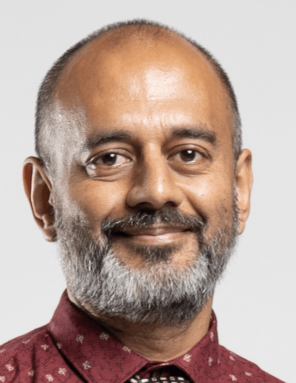
    Title: Perception/Control Co-Design for Autonomous Vehicles Speaker: Dr. Marilyn Wolf, University of Nebraska - Lincoln Date and Time: Monday, November 9, 2:00 pm Location: EH 2430 Abstract: Perception is a critical computational task in autonomous vehicles. Autonomous vehicles place stringent and somewhat conflicting demands on perception systems: high accuracy, low latency, and performance on limited […]
  • From Domain-Specific Accelerators to Spatial Architecture Exploration

    ISEB 1310

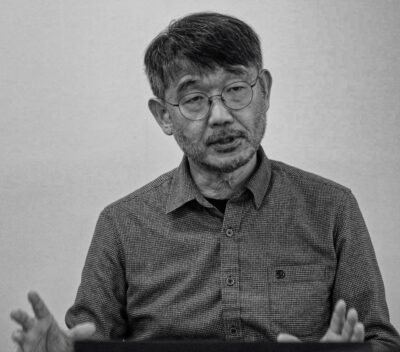
    Title: From Domain-Specific Accelerators to Spatial Architecture Exploration Speaker: Dr. Jongeun Lee Date and Time: Thursday, July 30, 10:30am Location: ISEB 1310 Abstract: Emerging scientific and machine learning workloads increasingly benefit from domain-specific hardware accelerators, yet designing efficient architectures for these applications requires both effective implementations and scalable methods for architectural exploration. In this talk, […]

  • Software-Defined Accelerator-Centric Systems – A Journey to AI and Big Data Acceleration

    ISEB 4020 Interdisciplinary Science and Engineering Building, Irvine, CA, United States

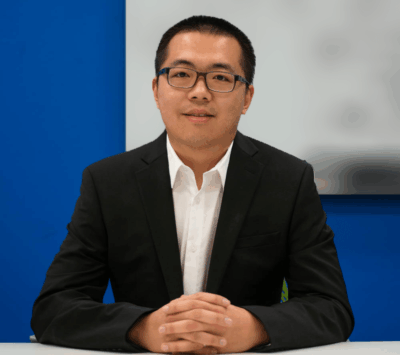
    Title: Software-Defined Accelerator-Centric Systems - A Journey to AI and Big Data Acceleration Speaker: Dr. Zhenman Fang Date and Time: Wednesday, July 29, 11:00am Location: ISEB 4020 Abstract: With the end of CPU scaling due to dark silicon limitations, customizable hardware accelerators have gained increasing attention in modern datacenters and edge devices, due to their […]

  • The Brave New (Quantum) World

    ISEB 1310

    Title: The Brave New (Quantum) World Speaker: Dr. Anupam Chattopadhyay Date and Time: Thursday, July 23, 10:00am Location: ISEB 1310 Abstract: Major advances across all the design stack of Quantum computing – algorithm, software, and hardware – has brought us to a realm where, it is impossible to ignore the effect of Quantum computing in […]

  • GOAL: An Industrially Validated Global Optimization Framework for Advanced Macro Placement in Semiconductor Design

    EH 2430 Engineering Hall, University of California, Irvine, Irvine, CA, United States

    DATE/TIME: Friday, February 13, 10:30am
    SPEAKER: Jooyoung Lee
    This talk presents a solution to build on a dedicated combinatorial-optimization engine that directly models the search space rather than relying on proxy rewards, advancing AI that can reliably solve the hardest optimization problems in semiconductor design and beyond.

  • Autonomy on a Budget: Enabling Intelligent Monitoring Through Low-Cost Embedded Systems

    EH 2430 Engineering Hall, University of California, Irvine, Irvine, CA, United States

    DATE/TIME: Tuesday, November 4, 2:00pm
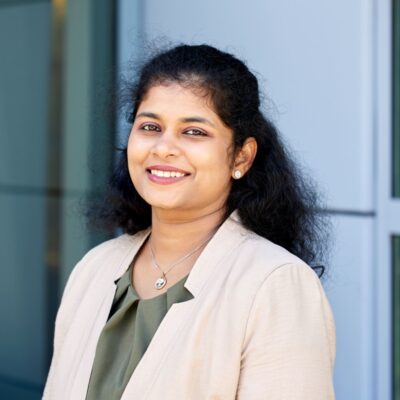
    SPEAKER: Dr. Prabha Sundaravadivel
    This talk presents recent advances in low-cost embedded autonomy, where edge AI, sensor fusion, and adaptive control enable real-time decision-making within compact, power-efficient platforms.

  • Unleashing Multi-GPU Computing to the Next-Level

    EH 2430 Engineering Hall, University of California, Irvine, Irvine, CA, United States

    DATE/TIME: Wednesday, October 15, 2:00pm
    SPEAKER: Dr. Xulong Tang
    I will discuss novel techniques such as lightweight invalidations for page translation, short-circuiting page table walks, and multi-instance GPU (MIG) reconfiguration strategies that collectively deliver substantial performance and efficiency gains to overcome these bottlenecks and unleash the full potential of multi-GPU computing.

  • Confidential Computing and Trusted Execution Environment: Challenges, Opportunities, and the Future

    EH 2430 Engineering Hall, University of California, Irvine, Irvine, CA, United States

    DATE/TIME: Monday, June 9, 11:00am
    SPEAKER: Mengyuan Li, Professor @ USC
    I will share my insights into two real-world vulnerabilities we uncovered within commercial Confidential Computing systems, along with our joint efforts with CPU manufacturers to address these issues in the latest server-grade CPUs.

  • TEE-Shielded LLM Partition – Efficiently Protect Model Security on User Devices

    EH 2430 Engineering Hall, University of California, Irvine, Irvine, CA, United States

    DATE/TIME: Monday, May 19, 11:00am
    SPEAKER: Ziqi Zhang, Postdoc Researcher @ University of Illinois Urbane-Champaign
    In this talk, I will introduce recent work on TEE-based LLM protection (TSLP) on the user devices: TEESlice (S&P24) and ArrowCloak (Security25 revision).

  • Efficient and Robust Defense against Query-based Black-box Attacks

    EH 2430 Engineering Hall, University of California, Irvine, Irvine, CA, United States

    DATE/TIME: Monday, May 19, 11:00am
    SPEAKER: Shaofei Li, Ph.D. @ Peking University
    In this talk, I will present our novel approach, Query Provenance Analysis (QPA), for defending against query-based black-box attacks robustly (against both non-adaptive and adaptive attacks) and efficiently (in real-time).

  • Security in Heterogeneous Systems

    EH 2430 Engineering Hall, University of California, Irvine, Irvine, CA, United States

    DATE/TIME: Monday, April 21, 11:00am
    SPEAKER: Yicheng Zhang, Ph.D. Candidate @ UC Riverside
    To improve the performance and efficiency of modern computing systems, architects increasingly adopt heterogeneous designs that tightly integrate specialized accelerators such as GPUs and FPGAs. In this talk, I will present my research efforts to uncover and mitigate security vulnerabilities in these heterogeneous platforms.

  • Optimizing AI Performance: Bridging Algorithmic and Hardware Innovations from Inference to Training

    ISEB 1200 Interdisciplinary Science and Engineering Building University of California, Irve, Irvine, CA, United States

    DATE/TIME: Wednesday, March 12, 2:00pm
    SPEAKER: Prof. Yu Bai, Intelligent Computing Research Lab @ CSU
    This talk explores the challenges and innovations in optimizing AI efficiency, bridging algorithmic advancements and hardware design to enhance performance from inference to training.